
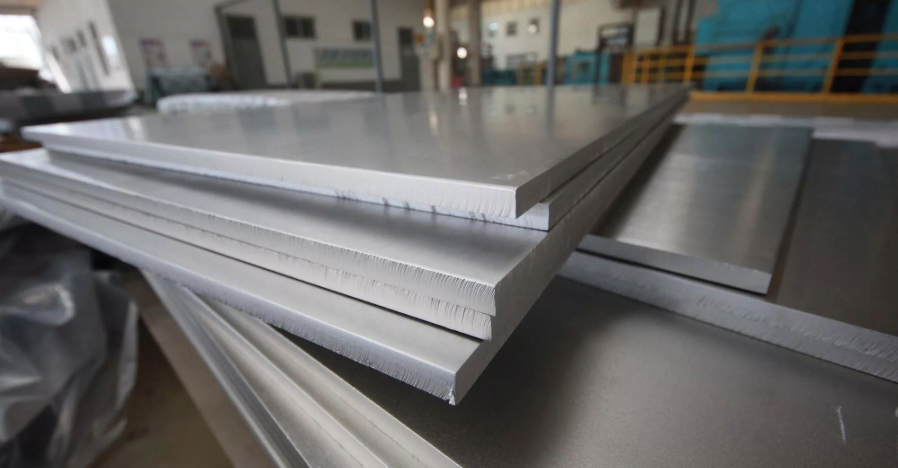
SHEET/PLATE
Sheet and plate are flat rolled metal products that differ primarily in thickness and typical applications. Sheet metal is usually thinner, generally less than 6 millimeters thick, and is used for applications requiring flexibility, ease of shaping, and lighter weight.
Common uses include automotive body panels, appliances, roofing, and ductwork. Sheets can be produced in various finishes, including hot-rolled, cold-rolled, and galvanized, depending on the desired surface properties and corrosion resistance. Plate metal, on the other hand, is thicker—usually greater than 6 millimeters—and is designed for heavy-duty structural applications where strength and durability are critical. Plates are commonly used in shipbuilding, bridges, construction equipment, pressure vessels, and heavy machinery. Both sheet and plate metals come in a variety of materials such as carbon steel, stainless steel, aluminum, and alloys, and are manufactured according to standards like ASTM A36, ASTM A516, and EN 10029 to ensure consistent quality.
Available Grades of SHEET/PLATE
| Material | Standard | Available Grades | |||||||||
|---|---|---|---|---|---|---|---|---|---|---|---|
| 1 | 2 | 3 | 4 | 5 | 6 | 7 | 8 | 9 | 10 | ||
| Stainless Steel | ASTM A312 / A213 | 304 | 304L | 304H | 309 | 310 | 310S | 316 | 316L | 316Ti | 317L |
| 321 | 321H | 347 | 347H | 410 | 446 | 904L | |||||
| Duplex / Super Duplex | ASTM A790 / A928 | Duplex S31803 / S32205 | Super Duplex S32750 / S32760 | ||||||||
| Nickel Alloys | ASTM B161 / B163 | Nickel 200 | Nickel 201 | Inconel 600 | Inconel 601 | Inconel 625 | Inconel 718 | Incoloy 800 | Incoloy 800HT | Incoloy 825 | |
| Alloy Steel | ASTM A335 / A213 | P5 | P9 | P11 | P12 | P22 | P91 | P92 | |||
| Titanium | ASTM B338 | Gr 1 | Gr 2 | Gr 5 | Gr 9 | ||||||
| Carbon Steel | ASTM A106 / A53 / API 5L | Seamless | ERW | SAW | LSAW | HSAW | API 5L | ||||
| Copper Nickel | ASTM B466 / B467 | CuNi 70/30 | CuNi 90/10 | ||||||||
| Other Alloys | - | SMO 254 | Alloy 28 | 253 MA (S30815) | Alloy 20 | Hastelloy | Aluminium | ||||
Dimensional Standards Table
| Sheet Type | Dimensions (mm) | Thickness Range | Standard | |
|---|---|---|---|---|
| Width (W) | Length (L) | |||
| Sheets | 1000 | 2000 | 0.5mm - 50mm | ASTM A240 / A480 |
| 1220 | 2440 | 0.5mm - 50mm | ||
| 1500 | 3000 | 0.5mm - 50mm | ||
| Plates | 1000 | 2500 | 3mm - 100mm | ASTM A240 / A480 |
| 1250 | 5000 | 3mm - 100mm | ||
| 2000 | 6000 | 3mm - 100mm | ||
| Coils | 1000 | Custom Length | 0.3mm - 6mm | ASTM A240 / A480 |
| 1250 | Custom Length | 0.3mm - 6mm | ||
| 1500 | Custom Length | 0.3mm - 6mm | ||
Perforated Sheet
Perforated sheet is a type of metal sheet that has been uniformly punched or stamped with holes, slots, or decorative patterns across its surface. These sheets are made from materials such as stainless steel, carbon steel, aluminum, and sometimes plastic, depending on the application requirements. The holes can be round, square, slotted, or custom-shaped, and are created through mechanical or laser processes to ensure precision and consistency. Perforated sheets are widely used in architectural, industrial, and commercial applications due to their functionality and aesthetic appeal. Common uses include ventilation panels, soundproofing, filtration systems, decorative facades, sunshades, security screens, and machinery guards. In architectural settings, they offer both visual appeal and practical benefits like light diffusion and airflow control. Perforated sheets also help reduce weight while maintaining structural integrity, making them ideal for both lightweight and high-strength applications.
Key Features:
-
1. Lightweight with Strength: Offers reduced weight compared to solid sheets while maintaining structural integrity.
-
2. Acoustic and Thermal Benefits: Often used in soundproofing and thermal insulation systems due to their ability to dissipate sound and heat.
-
3. Good Ventilation and Filtration: Ideal for applications where air, liquid, or light must pass through, such as HVAC systems, strainers, and screens.
Chequered Plates
Chequered plates, also known as checkered or tread plates, are metal sheets that feature a regular pattern of raised lines or diamonds on one side, which provides enhanced grip and traction. These plates are commonly made from materials such as mild steel, stainless steel, or aluminum, making them suitable for a wide range of applications due to their strength, durability, and resistance to corrosion. Chequered plates are widely used in industrial flooring, stair treads, ramps, walkways, and vehicle surfaces where slip resistance is essential. The raised pattern not only improves safety but also adds a level of aesthetic appeal. In addition to their functional benefits, chequered plates are easy to clean and maintain, making them ideal for use in environments that require high hygiene standards, such as food processing facilities and public transportation. Their robust design allows them to withstand heavy loads and harsh environmental conditions, further contributing to their popularity across various industries.
Key Features:
-
1. Anti-Slip Surface:The raised pattern (such as diamonds or lines) provides excellent slip resistance, making it ideal for flooring, stairs, and ramps.
-
2. Durability:Made from strong materials like mild steel, stainless steel, or aluminum, chequered plates can withstand heavy loads and rough usage.
-
3. Corrosion Resistance: Stainless steel and aluminum chequered plates offer good resistance to rust and corrosion, suitable for outdoor and marine environments.
-
4. Aesthetic Appeal: The patterned surface adds a visually appealing texture, often used in decorative or architectural applications.
Shim Sheets
Shim sheets are thin, precisely measured pieces of metal or other materials used to fill gaps, provide support, or ensure accurate spacing between components in engineering and mechanical assemblies. They are essential in applications where tight tolerances are required, helping to align parts, adjust clearances, and improve the performance and lifespan of machinery. Shim sheets are commonly made from stainless steel, brass, copper, aluminum, or plastic, depending on the application and environmental conditions. These sheets come in various thicknesses and can be easily cut or shaped to meet specific requirements. They are widely used in industries such as automotive, aerospace, manufacturing, and construction for tasks like machine alignment, die setting, bearing adjustments, and sealing. Shim sheets play a crucial role in reducing wear and tear, minimizing vibration, and enhancing assembly precision, making them an indispensable component in both maintenance and original equipment manufacturing.
Key Features:
-
1. High Precision:Manufactured to exact thickness tolerances for accurate spacing and alignment in mechanical assemblies.
-
2. Wide Range of Thicknesses:Offered in a variety of thicknesses, allowing for precise adjustments in machinery and components.
-
3. Excellent Corrosion Resistance:Especially when made from stainless steel or non-ferrous metals, shim sheets resist rust and corrosion in demanding conditions.
-
4. Easy to Cut and Shape:Can be easily trimmed, punched, or formed to fit specific dimensions or applications without special tools.
Coils
Coils are long, continuous strips of metal that have been wound into roll form after being processed through rolling mills. They are a fundamental raw material used across a wide range of industries due to their versatility, ease of handling, and suitability for further processing. Coils are typically made from materials such as stainless steel, carbon steel, aluminum, copper, and alloys, and are available in different finishes, thicknesses, widths, and edge types to meet specific application requirements. These coils can be hot-rolled or cold-rolled depending on the manufacturing process, with cold-rolled coils offering better surface finish and dimensional accuracy, while hot-rolled coils are known for their strength and cost-efficiency. Metal coils are commonly used in construction, automotive, appliances, HVAC, roofing, and manufacturing industries, where they are further cut, shaped, stamped, or fabricated into components or structural parts.
Key Features:
-
1. Continuous Length:Coils offer long, continuous strips of metal, ideal for uninterrupted processing in manufacturing.
-
2. Customizable Dimensions:Offered in various widths, thicknesses, and edge types (mill edge or slit edge) to meet specific project requirements.
-
3. High Strength & Durability:Coils are known for their structural integrity, making them suitable for load-bearing and heavy-duty applications.
-
4. Excellent Surface Finish:Especially with cold-rolled and surface-treated coils, offering clean and consistent finishes for visible or decorative parts.
Designer Sheets
Designer sheets are high-quality decorative metal sheets used to enhance the aesthetic appeal of interior and exterior spaces. These sheets are typically made from stainless steel, aluminum, brass, or copper and are available in a variety of patterns, finishes, and textures such as mirror, matte, etched, embossed, or brushed surfaces. Designer sheets are widely used in architectural design, home décor, commercial interiors, signage, elevators, wall panels, and furniture applications.
Their visual appeal is matched by durability and resistance to corrosion, making them ideal for both functional and decorative purposes. Whether used for cladding, partitioning, or detailing, designer sheets provide a modern and sophisticated finish that elevates any space. Customization in size, thickness, and finish is available to meet the specific design requirements of each project.
Key Features:
-
1. Aesthetic Versatility: Offered in a wide range of patterns, textures, and finishes to match diverse design themes.
-
2. Durable and Long-Lasting: Made from high-grade metals that resist corrosion, wear, and weathering.
-
3. Low Maintenance: Easy to clean and maintain, retaining their visual appeal over time.
-
4. Customizable Options: Available in different sizes, thicknesses, and design configurations to meet project specifications.
Sheet Plates
Sheet plates are flat, rectangular pieces of metal that are commonly used in a widwhatse range of industrial, structural, and construction applications. Manufactured in various thicknesses, widths, and lengths, sheet plates are typically made from materials such as stainless steel, carbon steel, aluminum, brass, and copper. These plates serve as foundational elements in fabrication processes due to their strength, durability, and adaptability.
Sheet plates are widely used in industries such as construction, shipbuilding, automotive, heavy machinery, and energy. Their flat surface makes them ideal for cutting, welding, drilling, bending, and other machining operations. Whether for load-bearing applications or general manufacturing needs, sheet plates provide reliable structural performance and corrosion resistance based on the material type selected.
Key Features:
-
1. High Strength and Durability: Designed to withstand mechanical stress, pressure, and harsh environments.
-
2. Versatile Applications: Suitable for construction, fabrication, infrastructure, and machinery manufacturing.
-
3. Available in Various Materials: Offered in stainless steel, carbon steel, aluminum, and more to suit specific application needs.
-
4. Machinable and Weldable: Easy to cut, shape, and weld for customized fabrication requirements.

