
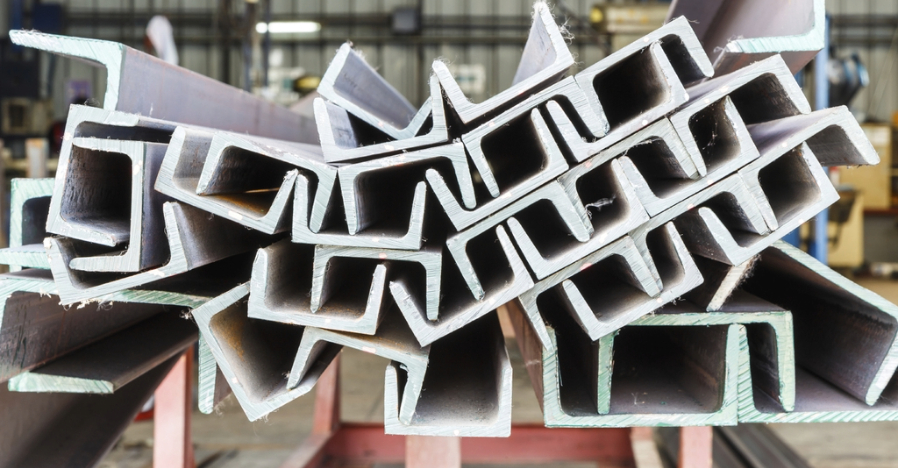
STRUCTURAL ANGLE CHANNEL
Structural angles and channels are essential components in construction and engineering, widely used for their strength, versatility, and ease of fabrication. Structural angles, also known as angle irons, have an L-shaped cross-section with two legs that meet at a 90-degree angle.
They are commonly used in frames, supports, and reinforcements where two surfaces need to be joined at a right angle. Their shape provides excellent strength along both axes, making them ideal for bracing, shelving, and structural frameworks. Structural channels, often called C-channels or U-channels, have a cross-section shaped like a squared-off "C" or "U". These are used in applications requiring greater strength in one direction, such as floor systems, bridges, trailers, and frames. Channels provide high strength-to-weight ratios and are often used in combination with other structural elements.
Available Grades of Structural Angle and Channel
| Material | Standard | 1 | 2 | 3 | 4 | 5 | 6 | 7 | 8 | 9 | 10 |
|---|---|---|---|---|---|---|---|---|---|---|---|
| Stainless Steel | ASTM A276 / ASTM A484 / ASTM A554 | 304 | 304L | 304H | 309 | 310 | 310S | 316 | 316L | 321 | 347 |
| 321H | 347H | 316Ti | 317L | 410 | 446 | 904L | |||||
| Duplex / Super Duplex | ASTM A276 / ASTM A240 | Duplex S31803 / S32205 | Super Duplex S32750 / S32760 | ||||||||
| Carbon Steel | ASTM A36 / ASTM A572 / IS 2062 | IS 2062 Gr A | IS 2062 Gr B | ASTM A36 | ASTM A572 Gr 50 | ASTM A529 | ASTM A500 | ||||
| Alloy Steel | ASTM A182 / ASTM A387 | A387 Gr 11 | A387 Gr 22 | A182 F5 | A182 F9 | A182 F11 | A182 F22 | ||||
| Nickel Alloys | ASTM B160 / B408 / B564 | Nickel 200 | Nickel 201 | Inconel 600 | Inconel 625 | Inconel 718 | Incoloy 800 | Incoloy 825 | |||
| Copper Nickel | ASTM B466 / B467 | CuNi 90/10 | CuNi 70/30 | ||||||||
| Titanium | ASTM B265 / ASTM B348 | Gr 1 | Gr 2 | Gr 5 | Gr 9 | ||||||
| Other Alloys | - | SMO 254 | Alloy 20 | Alloy 28 | 253 MA (S30815) | Hastelloy C22 / C276 | Aluminium (6061 / 6082) |
Dimensional Standards Table
| Product Type | Standard | Region / Organization | Description | Typical Size Range |
|---|---|---|---|---|
| Structural Angle | ASTM A36 / ASTM A6 | USA | Carbon steel equal/unequal angles | 25×25×3 mm to 200×200×25 mm |
| EN 10056-1 / EN 10025 | Europe | Hot-rolled equal and unequal angles | 20×20×3 mm to 200×150×15 mm | |
| IS 808 / IS 2062 | India | Hot-rolled structural steel angles | 25×25×3 mm to 150×150×12 mm | |
| JIS G3192 | Japan | Hot-rolled steel angle sections | 25×25×3 mm to 200×200×25 mm | |
| Structural Channel | ASTM A36 / ASTM A6 | USA | Standard C and MC channel sections | C75×40×5 mm to C380×100×10 mm |
| EN 10279 / EN 10025 | Europe | Hot-rolled parallel flange channels | U50×25×4 mm to U300×100×10 mm | |
| IS 808 / IS 2062 | India | Hot-rolled steel channels | 75×40 mm to 400×100 mm | |
| JIS G3192 | Japan | Hot-rolled channel sections | 50×25 mm to 300×90 mm |
Structural channel
Structural channels, also known as C-channels or U-channels, are hot-rolled steel sections with a cross-sectional shape resembling the letter "C" or "U". They consist of a wide central web and two flanges on either side, facing in the same direction. This design gives them excellent structural strength and makes them ideal for applications requiring load-bearing capacity primarily in one direction. Structural channels are widely used in construction, infrastructure, and industrial fabrication, including building frames, bridge supports, truck frames, trailers, and equipment structures. They are commonly made from carbon steel, stainless steel, or aluminum and come in various sizes and thicknesses to suit different design and load requirements. Channels can be used individually or welded together to form I- or box-shaped sections, depending on structural needs.
Key Features:
-
1. C- or U-Shaped Cross-Section: Designed with a central web and two parallel flanges, providing strength and support primarily in one direction.
-
2. High Strength-to-Weight Ratio: Offers good load-bearing capacity without excessive weight, making it efficient for structural and framing applications.
-
3. Easy to Fabricate: Can be easily cut, drilled, welded, or bolted, allowing for flexible design and installation.
Structural Angle
Structural angles, often referred to as angle irons or L-angles, are steel sections shaped like the letter "L," consisting of two legs that meet at a right angle. These versatile components are widely used in construction and engineering for framing, bracing, and support due to their excellent strength and rigidity in multiple directions. Structural angles come in various sizes and thicknesses, allowing them to be used in a broad range of applications—from simple shelving and equipment supports to heavy-duty structural frameworks in buildings, bridges, and machinery. They are typically made from carbon steel but are also available in stainless steel and other alloys to suit specific environmental or strength requirements. Their right-angle shape makes them ideal for joining and reinforcing structures, as they can easily be welded, bolted, or riveted to other components. Standards such as ASTM A36, EN 10056, IS 808, and JIS G3192 define the dimensions and mechanical properties of structural angles, ensuring consistency and reliability.
Key Features:
-
1. High Strength and Rigidity: Offers excellent load-bearing capacity and resistance to bending and twisting.
-
2. Versatile Use: Commonly used for framing, bracing, reinforcement, and support in construction, machinery, and structural applications.
-
3. Available in Various Sizes and Thicknesses: Suitable for light to heavy-duty applications depending on project requirements.
-
4. Made from Different Materials: Typically carbon steel, but also available in stainless steel and alloy steels for corrosion resistance or enhanced strength.

