
FASTENERS
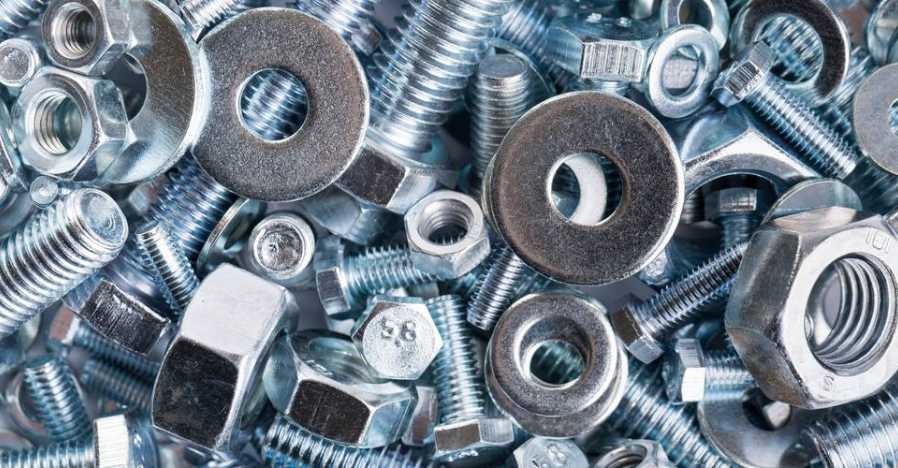
Fasteners are mechanical components used to securely join or affix two or more objects together, either permanently or temporarily. They play a vital role in construction, manufacturing, automotive, aerospace, and various industrial applications.
Common types of fasteners include bolts, nuts, screws, washers, rivets, and pins, each designed for specific load requirements and environmental conditions. Fasteners can be made from a variety of materials such as carbon steel, stainless steel, brass, aluminum, and alloy steels, depending on the strength, corrosion resistance, and temperature resistance needed for the application. They are available in a wide range of sizes, threads, and head types, and are manufactured to international standards such as ASTM, DIN, ISO, and ANSI to ensure compatibility and performance. Fasteners may also have different coatings or finishes—such as zinc plating, black oxide, or galvanizing—to enhance durability and resist corrosion. Their reliability, ease of installation, and ability to be removed or replaced make fasteners essential components in both temporary and permanent assemblies.
Available Grades of Fasteners
| Material | Standard | Grade | Type | Coating |
|---|---|---|---|---|
| Stainless Steel | ASTM A193 / A194 | B8, B8M | Bolts, Nuts, Washers | Passivated, Zinc Plated |
| ISO 3506 | A2, A4 | Screws, Studs | Electropolished | |
| DIN 933 / 934 | SS 304, SS 316 | Hex Bolts, Hex Nuts | Self-Color | |
| Carbon Steel | ASTM A307 | Grade A, Grade B | Bolts, Nuts | Black Oxide, HDG |
| ASTM A325 | Type 1, Type 3 | Structural Bolts | Phosphate Coated | |
| Alloy Steel | ASTM A193 | B7, B7M | Studs, Heavy Hex Nuts | Teflon Coated |
| Duplex Steel | ASTM A479 | 2205, 2507 | Bolts, Nuts | Plain Finish |
| Nickel Alloy | ASTM B166 | Inconel 600, Monel 400 | Screws, Nuts | Nickel Plated |
Fastener Dimensional Standards Table
| Fastener Type | Size (Inch / Metric) | Dimensions (mm) | Thread Type | Material | Standard | |
|---|---|---|---|---|---|---|
| Outer Diameter (OD) | Length (L) | |||||
| Bolts | 1/4" (M6) | 6.35 | 25 | UNC / UNF / Metric | Stainless Steel, Carbon Steel, Alloy Steel | ASME B18.2.1, DIN 933 |
| 3/8" (M10) | 9.52 | 50 | UNC / UNF / Metric | |||
| 1/2" (M12) | 12.7 | 75 | UNC / UNF / Metric | |||
| Nuts | 1/4" (M6) | 6.35 | - | UNC / UNF / Metric | Stainless Steel, Duplex Steel, Titanium | ASME B18.2.2, DIN 934 |
| 3/8" (M10) | 9.52 | - | UNC / UNF / Metric | |||
| 1/2" (M12) | 12.7 | - | UNC / UNF / Metric | |||
| Screws | 3/16" (M5) | 4.76 | 20 | Phillips / Slotted / Torx | Nickel Alloys, Cupro-Nickel, Titanium | ASME B18.6.3, DIN 7985 |
| 1/4" (M6) | 6.35 | 30 | Phillips / Slotted / Torx | |||
| 3/8" (M10) | 9.52 | 50 | Phillips / Slotted / Torx | |||
| Washers | 1/4" (M6) | 6.35 | 2 | - | Stainless Steel, Carbon Steel | ASME B18.21.1, DIN 125 |
| 3/8" (M10) | 9.52 | 2.5 | - | |||
| 1/2" (M12) | 12.7 | 3 | - | |||
| Studs | 1/4" x 3" (M6 x 75) | 6.35 | 75 | UNC / UNF / Metric | Alloy Steel, Stainless Steel | ASME B16.5, DIN 976 |
| 3/8" x 4" (M10 x 100) | 9.52 | 100 | UNC / UNF / Metric | |||
| 1/2" x 6" (M12 x 150) | 12.7 | 150 | UNC / UNF / Metric | |||
| Anchors | 1/4" x 2" (M6 x 50) | 6.35 | 50 | Wedge / Sleeve / Drop-In | Carbon Steel, Stainless Steel | ASTM F593, DIN 7504 |
| 3/8" x 3" (M10 x 75) | 9.52 | 75 | Wedge / Sleeve / Drop-In | |||
| 1/2" x 4" (M12 x 100) | 12.7 | 100 | Wedge / Sleeve / Drop-In | |||
Nuts
Nuts are a type of fastener with a threaded hole, used in conjunction with bolts, screws, or threaded rods to securely hold multiple components together. They are essential in creating strong, reliable joints in a wide range of applications, including construction, machinery, automotive, aerospace, and household appliances. Nuts come in various shapes and sizes, with the most common being hex nuts, which have six sides for easy gripping with tools. Other types include lock nuts, flange nuts, cap nuts, and wing nuts, each serving specific purposes such as vibration resistance or tool-free assembly. Typically made from materials like carbon steel, stainless steel, brass, and nylon, nuts are chosen based on the mechanical strength, corrosion resistance, and temperature tolerance required by the application.
Key Features:
-
1. Threaded Design: Internally threaded to mate with bolts, screws, or studs for secure fastening.
-
2. Variety of Types: Includes hex nuts, lock nuts, flange nuts, cap nuts, wing nuts, and more for different applications.
-
3. Corrosion Resistance: Often coated or plated (e.g., zinc, galvanized, black oxide) for protection in harsh environments.
-
4. Durability: Designed to withstand mechanical stress, vibration, and temperature extremes.
-
5. Wide Range of Sizes: Available in metric and imperial sizes to suit a broad range of applications.
Bolt
A bolt is a type of fastener used to hold materials together by passing through aligned holes and securing with a corresponding nut on the other side. It consists of a head (usually hexagonal) and a shank with external threads, designed to create a strong and secure mechanical joint. Bolts are widely used in construction, automotive, machinery, and structural applications due to their strength, reliability, and ease of assembly and disassembly. They are available in various types, such as hex bolts, carriage bolts, eye bolts, anchor bolts, and U-bolts, each suited for specific tasks. Our bolts are manufactured using high-quality raw materials and advanced forging and machining techniques, ensuring durability, strength, and dimensional accuracy. Available in various materials, sizes, threading types, and coatings, our bolt solutions are built for reliability and long-term performance in corrosive, high-pressure, and high-temperature environments.
Key Features:
-
1. Threaded Shank: External threads designed to mate with nuts or tapped holes for secure fastening.
-
2. Variety of Types: Includes hex bolts, carriage bolts, eye bolts, anchor bolts, U-bolts, and more for diverse applications.
-
3. Strong and Durable: Made from materials like carbon steel, stainless steel, alloy steel, brass, and titanium to provide high tensile strength.
-
4. Corrosion Resistance: Often coated with finishes such as zinc plating, hot-dip galvanizing, or black oxide to resist rust and environmental damage.
-
5. Ease of Use: Designed for easy installation and removal using standard tools, enabling maintenance and repairs.
Screw
A screw is a type of fastener characterized by a helical ridge, or thread, wrapped around a cylindrical shaft. It is designed to be inserted into materials—such as wood, metal, or plastic—by rotating it, which pulls the screw into the material and creates a secure hold. Screws are widely used in construction, manufacturing, electronics, and household applications due to their versatility and strong fastening capability. They come in various types including wood screws, machine screws, sheet metal screws, self-tapping screws, and lag screws, each tailored for specific materials and load requirements. Screws are typically made from materials like carbon steel, stainless steel, brass, and alloy steel, and often have protective coatings such as zinc plating or galvanizing to resist corrosion. The heads of screws vary in design—such as flat, pan, round, or hex heads—and are driven by different tools, including flathead, Phillips, Torx, or hex drivers. Manufactured to meet standards like ISO, ANSI, and ASTM, screws provide reliable, removable, and reusable fastening solutions across countless applications.
Key Features:
-
1. Threaded Shaft: Helical threads that grip materials securely by cutting or forming into the substrate.
-
2. Variety of Types: Includes wood screws, machine screws, sheet metal screws, self-tapping screws, and lag screws for different applications.
-
3. Material Options: Made from carbon steel, stainless steel, brass, and alloy steel to suit strength and corrosion resistance needs.
-
4. Head Designs: Available in multiple head types such as flat, pan, round, hex, and drive styles like Phillips, slotted, Torx, and hex.
-
5. Corrosion Resistance: Often coated or plated (e.g., zinc, galvanizing) for protection in harsh environments.
Stud bolt
A stud bolt is a type of fastener that consists of a threaded rod without a head, typically threaded on both ends or sometimes along its entire length. It is designed to be used with two nuts—one on each end—to securely join flanges, machinery parts, or structural components. Stud bolts are commonly used in high-pressure and high-temperature applications, such as in the oil and gas, petrochemical, power generation, and construction industries. They provide a strong, reliable connection that can withstand heavy loads, vibration, and thermal expansion.Made from materials like carbon steel, stainless steel, and various alloy steels, stud bolts are often manufactured to conform to standards such as ASTM, ASME, and ISO to ensure performance and safety. The absence of a bolt head allows for easy alignment and installation in tight spaces, and when paired with appropriate nuts and washers, stud bolts deliver durable, vibration-resistant joints that are essential in demanding industrial environments.
Key Features:
-
1. Headless Design: Threaded rod without a head, allowing for easy installation in tight spaces.
-
2. Double-Ended Threading: Threads on both ends for securing with two nuts, providing strong clamping force.
-
3. High Strength: Made from materials like carbon steel, stainless steel, and alloy steel for durability under heavy loads.
-
4. Standards Compliance: Manufactured to conform with ASTM, ASME, ISO, and other international standards.
-
5. Versatile Sizes: Offered in various diameters and lengths to suit different flange and structural requirements.
Threaded rod
A threaded rod is a long, straight metal rod that is fully threaded along its entire length, allowing it to be used as a versatile fastener in a wide range of applications. Also known as a stud or all-thread, threaded rods provide strong, adjustable connections by allowing nuts and other fasteners to be screwed onto them at any point along the rod. They are commonly used in construction, plumbing, electrical installations, machinery assembly, and automotive industries for joining, hanging, or stabilizing components. Threaded rods are manufactured from various materials, including carbon steel, stainless steel, brass, and alloy steels, to meet different strength and corrosion resistance requirements. They come in a variety of diameters, thread pitches, and lengths to suit specific project needs. Threaded rods comply with international standards such as ASTM, ISO, and DIN to ensure quality and compatibility. Their flexibility, ease of installation, and ability to handle tensile and shear loads make them essential components in many industrial and structural applications.
Key Features:
-
1. Fully Threaded: Threads run along the entire length for maximum adjustability and fastening flexibility.
-
2. Wide Size Range: Available in multiple diameters, thread pitches, and lengths to suit various project requirements.
-
3. High Strength: Designed to withstand significant tensile and shear loads.
-
4. Corrosion Resistance: Available with coatings or in corrosion-resistant materials for use in harsh environments.
-
5. Reusable and Adjustable: Can be cut to size and reused in different configurations, providing long-term value.
Rivets
Rivets are permanent mechanical fasteners used to join two or more materials by inserting a metal pin through aligned holes and deforming the tail end to hold the pieces together securely. Widely used in construction, aerospace, automotive, shipbuilding, and manufacturing industries, rivets provide strong, vibration-resistant, and durable joints that withstand shear and tensile forces. They come in various types, including solid rivets, blind (pop) rivets, tubular rivets, and semi-tubular rivets, each suited for different materials and access conditions. Rivets are typically made from materials such as aluminum, steel, stainless steel, copper, and brass, chosen based on strength, corrosion resistance, and weight considerations. Installation usually requires specialized tools or rivet guns, especially for blind rivets where access is available from only one side of the assembly. Rivets offer a reliable alternative to welding and bolting, particularly where heat-sensitive materials or quick assembly is a concern, making them an essential component in many industrial and structural applications.
Key Features:
-
1. Permanent Fastening: Creates a strong, lasting joint that cannot be easily removed.
-
2. Vibration Resistance: Provides durable, vibration-resistant connections ideal for dynamic or high-stress environments.
-
3. Heat-Free Joining: No heat involved, making them suitable for heat-sensitive materials.
-
4. Corrosion Resistance: Available in corrosion-resistant materials or coatings for harsh environments.
-
5. Wide Applications: Commonly used in aerospace, automotive, shipbuilding, construction, and manufacturing industries.
Anchor
An anchor is a type of fastening device used to securely attach objects or structures to materials that are typically brittle or non-structural, such as concrete, brick, masonry, or drywall. Anchors are essential in construction and engineering applications where direct fastening is not possible due to the material’s inability to hold threads or support heavy loads on its own. They work by expanding or locking into the base material once inserted into a pre-drilled hole, creating a firm and reliable hold. Common types of anchors include wedge anchors, sleeve anchors, drop-in anchors, expansion anchors, and chemical (epoxy) anchors, each designed for specific conditions and load requirements. Anchors are made from materials such as carbon steel, stainless steel, or nylon, and may be coated for corrosion resistance, especially in outdoor or marine environments.
Key Features:
-
1. Secure Fastening: Designed to attach objects to non-threaded, brittle, or weak base materials like concrete, brick, or drywall.
-
2. Strong Load Capacity: Provides reliable support for both static and dynamic loads, including heavy structural components.
-
3. Corrosion Resistance: Often coated or made from stainless steel for long-term performance in harsh or outdoor environments.
-
4. Corrosion Resistance: Depending on material, provides excellent resistance to corrosion and chemical exposure.
-
5. Permanent or Removable Options: Offers both permanent and semi-removable solutions depending on the anchor type.
Washers
A washer is a thin, typically disk-shaped component used in conjunction with bolts, screws, or nuts to distribute load, prevent damage to surfaces, and reduce the risk of loosening due to vibration. Washers serve several purposes in mechanical assemblies, including spacing, load distribution, insulation, sealing, and locking. They are commonly placed between the fastener head or nut and the surface of the connected parts. There are various types of washers, such as flat washers, which provide even load distribution; spring (lock) washers, which help prevent loosening due to vibration; and sealing washers, which offer a fluid-tight seal. Washers are manufactured from a range of materials including carbon steel, stainless steel, brass, copper, nylon, and rubber, depending on the functional and environmental requirements. Used across industries such as construction, automotive, aerospace, electrical, and machinery, washers are essential for maintaining the integrity, safety, and longevity of bolted connections.
Key Features:
-
1. Load Distribution: Spreads the load of a fastener over a larger surface area to prevent material damage.
-
2. Corrosion Resistance: Available with coatings (e.g., zinc-plated, galvanized) or in corrosion-resistant materials for harsh environments.
-
3. Cost-Effective: Inexpensive but essential component that improves the performance and lifespan of fastened joints.
Spring
Spring fasteners are specialized fastening components that incorporate spring-like properties to maintain tension, absorb vibration, or provide a secure hold under dynamic loads. They are designed to compensate for thermal expansion, settling of materials, and movement due to vibration or impact, ensuring consistent clamping force over time. Common types of spring fasteners include spring washers (such as split lock washers and wave washers), retaining rings, snap rings, and push-on fasteners. These fasteners are often used in assemblies where maintaining preload and preventing loosening are critical, such as in automotive suspensions, machinery, electrical equipment, and aerospace components. Made from materials like hardened steel, stainless steel, or spring-grade alloys, spring fasteners are engineered for resilience, fatigue resistance, and long-term performance.
Key Features:
-
1. Elastic Functionality: Designed to maintain tension and absorb vibration or movement.
-
2. Self-Locking Capability: Helps prevent loosening of fasteners due to dynamic loads or vibration.
-
3. Consistent Clamping Force: Maintains preload even with material settling or thermal expansion.
-
4. Durability: Built to withstand repeated stress and long-term use in dynamic environments.
-
5. Corrosion Resistance: Available with protective coatings or in corrosion-resistant materials for harsh conditions.

